November 20, 2011

Playing in the gaming sector... an interview with Mitch Olson at SmallWorlds


Australia is home to a vibrant gaming sector, yet over the past few years a string of high-profile games developers have closed their doors for business thanks to the high Australian dollar.

With the rise of mobile and social gaming, many overseas publishers have also pulled the plug on video games midway through development, leaving Australian studios scrambling to secure new work or risk lapsing into insolvency.

The secret to survival may depend on introducing more resilient business models, so I recently interviewed the very talkative Mitch Olson, founder of SmallWorlds, about establishing NZ's largest social gaming company in New Zealand. Mitch has a knack for attracting millions of dollars in external investment - both from government grants & private investors - and is using its latest round of funding to fund the company's expansion into Brazil.

Read the interview here...

November 14, 2011

Icebreaker interview: has Caroline Hamilton devised a new way of funding albums?


In London, an investment fund called Icebreaker has devised a new model for funding the creation of music.

Created by entrepreneur Caroline Hamilton, the model brings investors together with artists and bands in the same way the feature film industry relies on financing from private investors. Will it work?

Caroline politely ignored her jet lag on a recent trip to Brisbane to explain how the Icebreaker model works. Our conversation is published here

November 12, 2011

Creative3, Brisbane


I travelled to Brisbane last month to interview two of the speakers at the Creative3 forum, which was headlined by Stefan Sagmeister. Hats off to Stefan -- for years now he's given speeches and written books about the value of taking time off to creatively re-charge, and people still love hearing him talk. I've seen him give similar presentations in three different countries, and from a design perspective they're not all that surprising, and a little repetitive, though on a personal level they are endearing because they reveal the things that matter to Stefan -- happiness, friendship, curiosity, freedom, love.

More illuminating was the fact that Brisbane has come such a long way in terms of its support of the creative sector. The conference highlighted the business end of design -- pathways to investment, business culture, idea generation, disruptive entrepreneurs, new models for entertainment and arts financing -- all the aspects of business that creative professionals often need guidance with.

Most illuminating of all: I am forced to admit Brisbane has come a long way since my childhood, when I used to visit my grandma over the Christmas holidays, reluctantly, with my sisters, when we were overwhelmed by the sweltering boringness of the city compared to Sydney. Today, there's the GoMA, the award-winning State Library (designed by Donovan Hill), and tiny enclaves of designer restaurants and wines bars. I'd still never live there though.

October 9, 2011

Taste promotes its Sydney launch with a new magazine


Taste furniture showrooms recently opened in Sydney, with the goal of bringing affordable European-style designs to Australian renovators.

I've written three articles that feature in the first issue of the Taste magazine...

#1
The first article offers a modernist tour of Europe, from Eileen Gray's E-1027 house in the French Riviera to the Rietveld Schroder House in Utrecht. The house is tiny, but its significance is huge as it typifies the architectural principles of the De Stijl movement. The article also features the Royal Hotel in Copenhagen, designed by Arne Jacobsen, and Villa Tugendhat in Brno, Czech Republic, designed by Mies van der Rohe.

#2
The second article is all about Margarete Schutte-Lihotzkey, Austria's first female architect and designer of the pragmatic Frankfurt Kitchen, which has inspired all kitchens since the 1920s. Without Margarete, kitchens might look very different today - and while her original designs were akin to a laboratory, they were unpretentious, hygienic, affordable and remarkably efficient, making Margarete one of the world's most influential - yet lesser known - architects.

#2
The third article is a 'Design Showcase' featuring houses designed by award-winning Australian architects: MCK Architects, CODA (Perth), John Andreas and Greg Natale Design.

September 19, 2011

Adapptor & Perth's creative sector


I've been keeping an eye on the creative industries in Perth, WA for awhile now. As one of the most isolated cities in the world, Perth has long been considered a creative backwater, more famous for the stuff it digs out of the ground than for its creativity.

But a growing group of creative companies are making Perth's creativity known on a global stage. To name a few: Block (advertising & branding), CODA (architecture), f22 photography, Zekka & Testtube (fashion & design) ... they are all worth checking out.

I recently interviewed Marc Loveridge, founder of Adapptor, and have added him to my list of WA's most interesting creative players.

Marc believes the mobile internet is changing the definition of what it means to be ‘creative’. He says the biggest challenge of running a creative business is Perth is its transient workforce. He was a candid interviewee, and further proof that WA's creative sector is coming of age...

Read the interview here

August 12, 2011

Neon Lane: Tokyo comes to Melbourne


This week I've been working with Right Angle Studio to promote Neon Lane - Melbourne's newest laneway redevelopment - designed by Australian design duo Craig & Karl. The laneway features up to 60 neon lightboxes, and is located adjacent to retail development 206 Bourke St Melbourne.

Read the Herald Sun's coverage here

July 12, 2011

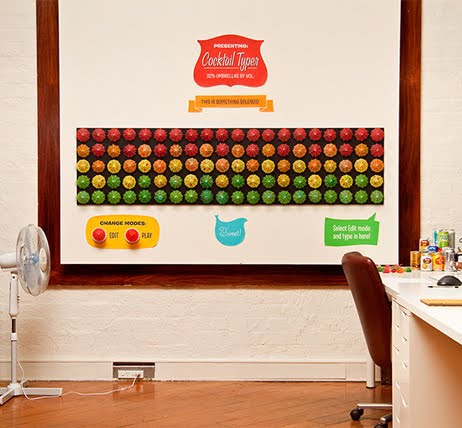
something splendid, melbourne


James Yencken and Jonathon Bellew were studying a Bachelor of Design (Visual Communication) at Monash University when they decided to launch their own design studio, Something Splendid. Their earliest clients were their friends, whose design briefs became their final year projects.

Something Splendid differentiates itself by fusing hand-made craftsmanship with digital animation.

I recently caught up with Something Splendid to uncover their secrets to launching a successful start-up design practice, and I thought they were splendidly clever in articulating their vision... The article appears here

April 9, 2011

Discomfort has its advantages


Two years ago, I decided to spend Christmas in Tibet. It's impossible to describe how incredible this trip was, from the moment the plane landed to the moment we crossed the border by foot into Nepal.

So I was chuffed when Women's Health magazine invited me to write a short piece about a travel experience that "broadens the mind", which follows on from a piece I wrote for Sunday magazine based loosely on 'Eat, Pray, Love'. The Women's Health piece appears in the April 2011 issue as part of the article 'Tour de chance'.

March 28, 2011

Parallax has a new website


I interviewed Matthew Remphrey at Parallax for a story about graphic design today and noticed the studio has launched a new website.

Based in Adelaide, Parallax is one of Australia's most awarded design studios, famous for creating designs that are not only aesthetically original but also strategically robust. The studio's new website is worth browsing - not only does it unveil something of the studio's design process, but it summarizes each and every client neatly.

My interview with Matthew will appear in CREATIVE magazine's annual 'Design' issue in June 2011.

March 22, 2011

ADFEST 2011 & humility in advertising


Today I returned from the Asia Pacific Advertising Festival in Thailand, where I was Editor of ADFESTbuzz and Lotus News.

The festival's guest of honour this year was Washington Olivetto, founder of W\Brasil in Sao Paolo. I was underwhelmed by Olivetto - many felt his speech only indicated that both he and his agency were far past their heyday in the 1980s and 90s.

The Jury Presidents invited from agencies in Asia were so much more inspiring, and humble. I was particularly impressed by Ram Madhvani, director at Equinox Film in Mumbai, who told me the reason his films are considered so exotic is because they're firmly grounded in Indian culture. He doesn't attempt to create films that global audiences will like; he makes films that are unashamedly local, which is why his Happydent commercial (above) could only have originated in India.

I was also struck by Satoshi Takamatsu, founder of Ground in Tokyo, who has created lots of award-winning integrated campaigns. Satoshi is wise, unassuming and thoughtful - I was touched by his confession that he is too embarassed to tell his family how successful he is -- humility in advertising is a rarity!

To see this year's winners of the ADFEST Lotus Awards, visit www.adfest.com