March 27, 2013

“Dear Volkswagen. I’m stuck in traffic and my ‘Smileage’ is zero.”

My second post as guest editor for Branded Arts Review is all about Volkswagen's new app, Smileage.

Smileage is the first cab off the rank in Google’s Art, Copy & Code project, and for this reason alone it’s worth checking out.

The app allows you to tag passengers, share photos, virtually ‘punch’ other cars, and lets friends keep track of your journey. I'm not convinced it's going to change the world, but you can decide for yourself...

March 20, 2013

"I like to soak in now-ness"

This week, I interviewed Nathan Yong for Incubate magazine.

Nathan Yong is an industrial designer based in Singapore, who creates furniture and objects that are deceptively simple and beautifully engineered. He is taking the international design world by storm, yet remains endearingly humble.

Here are a few of my favorite quotes from our interview:

"I see poetry in the everyday: an ice cream dropping on the ground, a sad child, a rusty tool, a broken chair... everything seems to be in slow motion and beautiful for me... I know it is a cliche but it's true for me, I like to soak in now-ness."

"To me beauty is skin deep, we need more depth to appreciate how things work, and from these understandings we can appreciate the things around us, it is my way of respecting life.

"Design is sexy but without any purpose or reason, it can be dumb at times. Engineering is clever and that to me is sexy."

"My constant goal is to always be a better designer and a person, I believe the rest are transient and don't really matter."

www.nathanyongdesign.com

March 16, 2013

Target at TED & SXSW. Really?

I'm delighted to be guest editing Branded Arts Review this month, which critiques innovative projects that infiltrate popular culture, yet were created and funded by brands.

For my first post, I've written about Target.

When you think of Target, you probably think of its bullseye logo and the cheap clothes, kitchen appliances, tea towels, garden rakes and underpants that are sold from its gigantic superstores.

So what was Target doing last week at South by Southwest (SXSW) in Austin, Texas, the world’s über-cool barometer of innovation and a breeding ground for the likes of Twitter?

And what was Target doing at TED’s Long Beach, California conference a couple of weeks earlier?

Was it a stroke of sponsorship genius? Or is Target skewing oddly off course, forgetting it is not in fact a start-up tech company, but a discount retailer?

You can read my critique here

January 15, 2013

Svbscription is Christmas wrapped in a box (but it's for men, sorry ladies)

I'd never heard of subscription services 'til now, but I love the concept.

What could be better than receiving a box full of designer trinkets every few months, curated by someone cooler than you? By the time your box arrives, you'll have forgotten that you paid an obscene amount of money to subscribe.

I was curious to see that Portable’s Creative Director, Andrew Apostola, is one of four 'modern gentleman' behind Svbscription.

I interviewed Andrew back in 2011, along with his business partner Simon Goodrich, when they explained their vision for Portable - a technology company with an eye for fashion and art, based in Melbourne and New York.

I'm a fan of the idea and a fan of Portable, so if you're a discerning man with an eye for beautiful things, check out the site

November 1, 2012

My latest project has 2 heads, 4 ears and 20 toes

I've been busy on a different project lately, which has kept me from updating this blog.

I know. Adorable. I made them myself.

Introducing Hunter & Ashley, identical twin sproglets, who have made my life very busy, chaotic, sleepless and - from a writing point-of-view - unproductive. And yet, so much more fulfilling.

September 16, 2012

Design Integration Pilot

"The Design Integration Pilot is helping Australian manufacturing businesses transform through design, proving designers may become in demand as business strategists."

I recently wrote about the Design Integration Pilot, which is helping Australian manufacturing businesses transform through design. Similar initiatives have proven hugely successful in countries like the UK and New Zealand, so it's about time we got a program of our own - we'll need something to fall back on if our coal runs out.

In a nutshell, the DIP is a pilot program that unites designers and manufacturers in South Australia and New South Wales with the goal of driving innovation, profitability and global competitiveness.

As one interviewee told me: “Australia is experiencing a blind spot and a skills gap. I don’t think Australia’s tertiary education system gives sufficient emphasis to design as a problem-solving enterprise. We have to move away from defining ‘design’ as a product outcome, to seeing ‘design’ as a process.”

Designers of the future will have the opportunity to design not just products, logos and brands, but also business strategies, operational systems and business models.

Read the full article here

August 10, 2012

Who are the most powerful people in media, marketing & advertising in Australia?

The answer depends on who you ask, but every year AdNews publishes its 'Power 50' list, and this year I helped to write a few of the profiles.

My profiles included Mark Lollback, chief marketing officer at McDonalds Australia; Jerry Harris, News Limited; and Andy Lark, Chief Marketing & Online Officer at Commonwealth Bank, who all made their debut to the 'Power 50' ranking in 2012.

To read my incredibly insightful profiles, I'm afraid you have to be a subscriber, but the list is out in today's issue

June 1, 2012

Beyond the dots

The latest issue of Incubate is out, and it features an article I wrote about contemporary indigenous artists & the stereotypes that surround them.

I had the pleasure of meeting Brisbane artist Vernon Ah Kee, who believes his graphic artworks and charcoal portraits (left) paint a more realistic picture of Aboriginality than dot paintings of the desert. To Ah Kee, such images portray a utopian, stereotypical view that is increasingly out-of-touch with how the vast majority of Aborigines live.

I also interviewed Jonathan Jones, considered one of the most distinctive Aboriginal artists to emerge in Australia over the past decade.

You can download issue 7 of Incubate magazine here

May 25, 2012

Taking advantage of the digital economy

I recently interviewed digital entrepreneurs in Australia and the UK about the best ways of taking advantage of the National Broadband Network (NBN). I know what you're thinking. NBN = snore. But the technology will open up lots of doors (and competition from overseas), so if you're a digital or creative entrepreneur it's worth reading.

I loved speaking to Art Processors in Melbourne, which developed an impressive mobile platform called 'The O' for the Museum of Old and New Art (MONA) in Tasmania. Art Processors are now taking the technology global, because it has the potential to transform the experience of visiting art galleries.

I also loved speaking to the co-founder of London-based CultureLabel.com, a website that sells affordable art from galleries around the world. Don't visit the site if you don't want to tempted to spend money. You've been warned.

Read the story here on CreativeInnovation.net.au

March 21, 2012

UTS: Designing the Future of Business - a copywriting project with Frost Design


I had the pleasure of working with Frost Design and Professor Roy Green recently, helping UTS Business School articulate its vision for the future of business education.


Professor Green is Dean of UTS Business School and is highly respected amongst Australian business executives. Since joining UTS Business School a year or two ago, he has completely reshaped the university's approach to business eduction, and believes 'integrative thinking' should play a major role in shaping business graduates of the future.

I worked closely with Professor Green and Frost Design to write a new brochure for UTS Business School, which launched at the Opera House on 21 March.

The university's approach to business education is embedded it its new campus, designed by Frank Gehry. The idea is that design thinking is now crucial to management, and the campus is symbolic of the fact that leaders of the future will need to be creative, as well as business savvy.

Gehry describes the building as a "tree of knowledge" - an evolving, growing organism that fosters collaboration and the cross-pollination of ideas - and this sketch (above) is his original design sketch for the campus, which should open in 2013.

February 2, 2012

Buro North interview


Melbourne studio Büro North designs everything from logos to signage and wayfinding systems...


My interview with Finn Butler, co-director of Büro North, is now up on CreativeInnovation

I found Finn to be an unusually thoughtful designer when it comes to articulating the thinking behind the studio's work. I learned that designing signage systems is far more complicated than designing signs -- it's about designing human behaviour. It's also fascinating that he worked on the way finding system at Terminal 5 at Heathrow, which must have been a logistical nightmare, before moving to Melbourne and eventually joining Soren Luckins as a partner at Buro North.

Interviews with 'The Kuchelmeister' & Australian artist Bonita Ely


Issue 6 of Incubate magazine features two of my interviews -- the first with Volker Kuchelmeister, head of the Media Laboratory at the iCinema Centre for Interactive Media Research in Sydney, and the second with the wonderfully kooky Australian artist/sculptor/performance artist Bonita Ely. Kuchelmeister & Ely are both lecturers at COFA.

I particularly enjoyed meeting Bonita Ely, a passionate environmentalist with a wry sense of humour.

When Ely received a half-woman, half-chicken toy as a gift from friends, she was so delighted by the toy's garish appearance she named it 'Chook Woman'. Chook Woman features prominently in a series of photographs exhibited by Ely in August 2010 at Campbelltown Arts Centre.

"She's got tits that stick out and a little bow in her hair and very long legs. She doesn't see the pollution, and she thinks the mining is wonderful," says Ely, eyes twinkling with bemusement.

Ely believes art is about making things, not starving in garrets and waiting to be accepted into an elitist art establishment -- a sentiment that I love.

I also spoke with Volker Kuchelmeister about the art of 3D storytelling, which students at COFA can now learn thanks to a new course at the COFA School of Media Arts.

Kuchelmeister explained how stereographic technology has advanced since the 1950s..."Until recently, 3D was really just a tool to sell more expensive movie tickets. But today it is used more cleverly as a creative storytelling tool as it offers an added dimension," he says.

November 20, 2011

Playing in the gaming sector... an interview with Mitch Olson at SmallWorlds


Australia is home to a vibrant gaming sector, yet over the past few years a string of high-profile games developers have closed their doors for business thanks to the high Australian dollar.

With the rise of mobile and social gaming, many overseas publishers have also pulled the plug on video games midway through development, leaving Australian studios scrambling to secure new work or risk lapsing into insolvency.

The secret to survival may depend on introducing more resilient business models, so I recently interviewed the very talkative Mitch Olson, founder of SmallWorlds, about establishing NZ's largest social gaming company in New Zealand. Mitch has a knack for attracting millions of dollars in external investment - both from government grants & private investors - and is using its latest round of funding to fund the company's expansion into Brazil.

Read the interview here...

November 14, 2011

Icebreaker interview: has Caroline Hamilton devised a new way of funding albums?


In London, an investment fund called Icebreaker has devised a new model for funding the creation of music.

Created by entrepreneur Caroline Hamilton, the model brings investors together with artists and bands in the same way the feature film industry relies on financing from private investors. Will it work?

Caroline politely ignored her jet lag on a recent trip to Brisbane to explain how the Icebreaker model works. Our conversation is published here

November 12, 2011

Creative3, Brisbane


I travelled to Brisbane last month to interview two of the speakers at the Creative3 forum, which was headlined by Stefan Sagmeister. Hats off to Stefan -- for years now he's given speeches and written books about the value of taking time off to creatively re-charge, and people still love hearing him talk. I've seen him give similar presentations in three different countries, and from a design perspective they're not all that surprising, and a little repetitive, though on a personal level they are endearing because they reveal the things that matter to Stefan -- happiness, friendship, curiosity, freedom, love.

More illuminating was the fact that Brisbane has come such a long way in terms of its support of the creative sector. The conference highlighted the business end of design -- pathways to investment, business culture, idea generation, disruptive entrepreneurs, new models for entertainment and arts financing -- all the aspects of business that creative professionals often need guidance with.

Most illuminating of all: I am forced to admit Brisbane has come a long way since my childhood, when I used to visit my grandma over the Christmas holidays, reluctantly, with my sisters, when we were overwhelmed by the sweltering boringness of the city compared to Sydney. Today, there's the GoMA, the award-winning State Library (designed by Donovan Hill), and tiny enclaves of designer restaurants and wines bars. I'd still never live there though.

October 9, 2011

Taste promotes its Sydney launch with a new magazine


Taste furniture showrooms recently opened in Sydney, with the goal of bringing affordable European-style designs to Australian renovators.

I've written three articles that feature in the first issue of the Taste magazine...

#1
The first article offers a modernist tour of Europe, from Eileen Gray's E-1027 house in the French Riviera to the Rietveld Schroder House in Utrecht. The house is tiny, but its significance is huge as it typifies the architectural principles of the De Stijl movement. The article also features the Royal Hotel in Copenhagen, designed by Arne Jacobsen, and Villa Tugendhat in Brno, Czech Republic, designed by Mies van der Rohe.

#2
The second article is all about Margarete Schutte-Lihotzkey, Austria's first female architect and designer of the pragmatic Frankfurt Kitchen, which has inspired all kitchens since the 1920s. Without Margarete, kitchens might look very different today - and while her original designs were akin to a laboratory, they were unpretentious, hygienic, affordable and remarkably efficient, making Margarete one of the world's most influential - yet lesser known - architects.

#2
The third article is a 'Design Showcase' featuring houses designed by award-winning Australian architects: MCK Architects, CODA (Perth), John Andreas and Greg Natale Design.

September 19, 2011

Adapptor & Perth's creative sector


I've been keeping an eye on the creative industries in Perth, WA for awhile now. As one of the most isolated cities in the world, Perth has long been considered a creative backwater, more famous for the stuff it digs out of the ground than for its creativity.

But a growing group of creative companies are making Perth's creativity known on a global stage. To name a few: Block (advertising & branding), CODA (architecture), f22 photography, Zekka & Testtube (fashion & design) ... they are all worth checking out.

I recently interviewed Marc Loveridge, founder of Adapptor, and have added him to my list of WA's most interesting creative players.

Marc believes the mobile internet is changing the definition of what it means to be ‘creative’. He says the biggest challenge of running a creative business is Perth is its transient workforce. He was a candid interviewee, and further proof that WA's creative sector is coming of age...

Read the interview here

August 12, 2011

Neon Lane: Tokyo comes to Melbourne


This week I've been working with Right Angle Studio to promote Neon Lane - Melbourne's newest laneway redevelopment - designed by Australian design duo Craig & Karl. The laneway features up to 60 neon lightboxes, and is located adjacent to retail development 206 Bourke St Melbourne.

Read the Herald Sun's coverage here

July 12, 2011

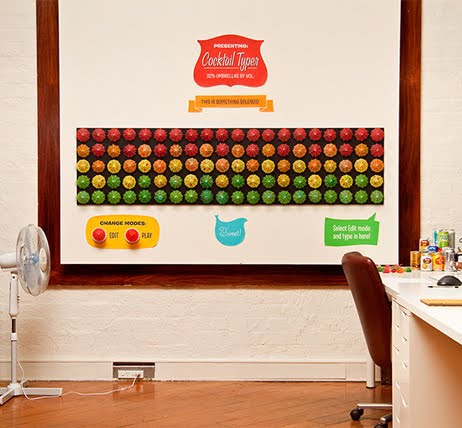
something splendid, melbourne


James Yencken and Jonathon Bellew were studying a Bachelor of Design (Visual Communication) at Monash University when they decided to launch their own design studio, Something Splendid. Their earliest clients were their friends, whose design briefs became their final year projects.

Something Splendid differentiates itself by fusing hand-made craftsmanship with digital animation.

I recently caught up with Something Splendid to uncover their secrets to launching a successful start-up design practice, and I thought they were splendidly clever in articulating their vision... The article appears here

April 9, 2011

Discomfort has its advantages


Two years ago, I decided to spend Christmas in Tibet. It's impossible to describe how incredible this trip was, from the moment the plane landed to the moment we crossed the border by foot into Nepal.

So I was chuffed when Women's Health magazine invited me to write a short piece about a travel experience that "broadens the mind", which follows on from a piece I wrote for Sunday magazine based loosely on 'Eat, Pray, Love'. The Women's Health piece appears in the April 2011 issue as part of the article 'Tour de chance'.